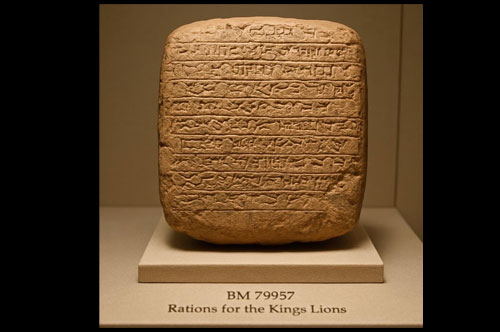
 A cuneiform tablet (depicted above or to the left) from the reign of Nebuchadnezzar II records rations of “10 sheep for the lions of the king,” confirming that lions were kept in captivity at Babylon.
The actual tablet is housed in the British Museum collection and contains text recording rations for the king’s lions during Nebuchadnezzar II’s reign. The authentic artifact would feature cuneiform script typical of Neo-Babylonian administrative records.
The archaeological record suggests that lions were likely housed in:
– Underground chambers or pits
– Dedicated enclosures within palace complexes
– Structures that were part of royal menageries
The biblical account in Daniel 6 describing a den with an entrance that could be sealed with a stone is consistent with the general concept of how dangerous animals might have been contained in the ancient Near East, though no exact structure matching this description has been definitively identified by archaeologists.
According to Daniel 6:17, “A stone was brought and laid on the mouth of the den, and the king sealed it with his own signet and with the signet of his lords, so that nothing might be changed concerning Daniel.”
The sealing process likely involved:
1. The Stone Covering: A large stone would have been placed over the entrance to the den. This stone would have been heavy enough to prevent escape but could be moved when necessary to feed the lions or remove Daniel later.
2. Clay Seals: Soft clay would have been applied to the stone and surrounding area.
3. Signet Impressions: Darius would have pressed his personal signet ring into the clay, creating a unique impression. The biblical account mentions that his lords also applied their signets, creating multiple seals.
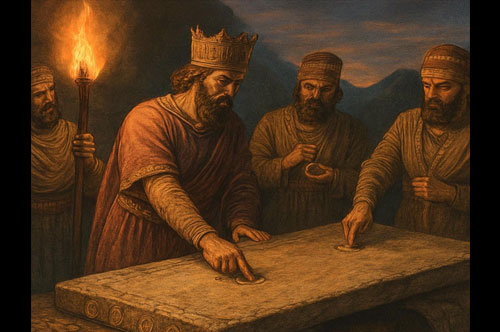 4. Purpose of the Seals: These clay seals served several important functions:
– Legal verification that the sentence was carried out
– Prevention of tampering (the seals would break if the stone was moved)
– Official documentation that neither Daniel’s friends nor the king himself interfered
– Enforcement of the “unchangeable” nature of Medo-Persian law
This sealing method was consistent with ancient Near Eastern administrative practices, where clay seals impressed with signet rings or cylinder seals were commonly used to authenticate documents and secure containers or doors. The multiple seals from both the king and his nobles served as witnesses to ensure that no one could rescue Daniel without detection.
The archaeological record confirms that such sealing practices were common in the Persian Empire for securing important locations and documents.